


What Is A Dog Training Lead? Everything You Need To Know

A dog training lead (also called a training line) is a longer, specialised lead designed to help you teach your dog specific behaviours like recall, loose lead walking, and impulse control. Unlike your everyday walking lead, training leads give your dog more freedom to move while you maintain control and safety. They come in different lengths and styles, from 2 metre short training leads to 10 metre long lines, and include features like double clips for versatile handling. You use them in open spaces where your dog can practise skills without the risk of running off.
This guide covers everything you need to know about training leads. You'll learn what sets them apart from standard leads, why they work better for specific training goals, and how to choose the right type for your dog. We'll walk you through using them safely and effectively, whether you're working on recall in the park or teaching your dog not to pull. By the end, you'll understand exactly which training lead suits your needs and how to use it properly.
What defines a dog training lead
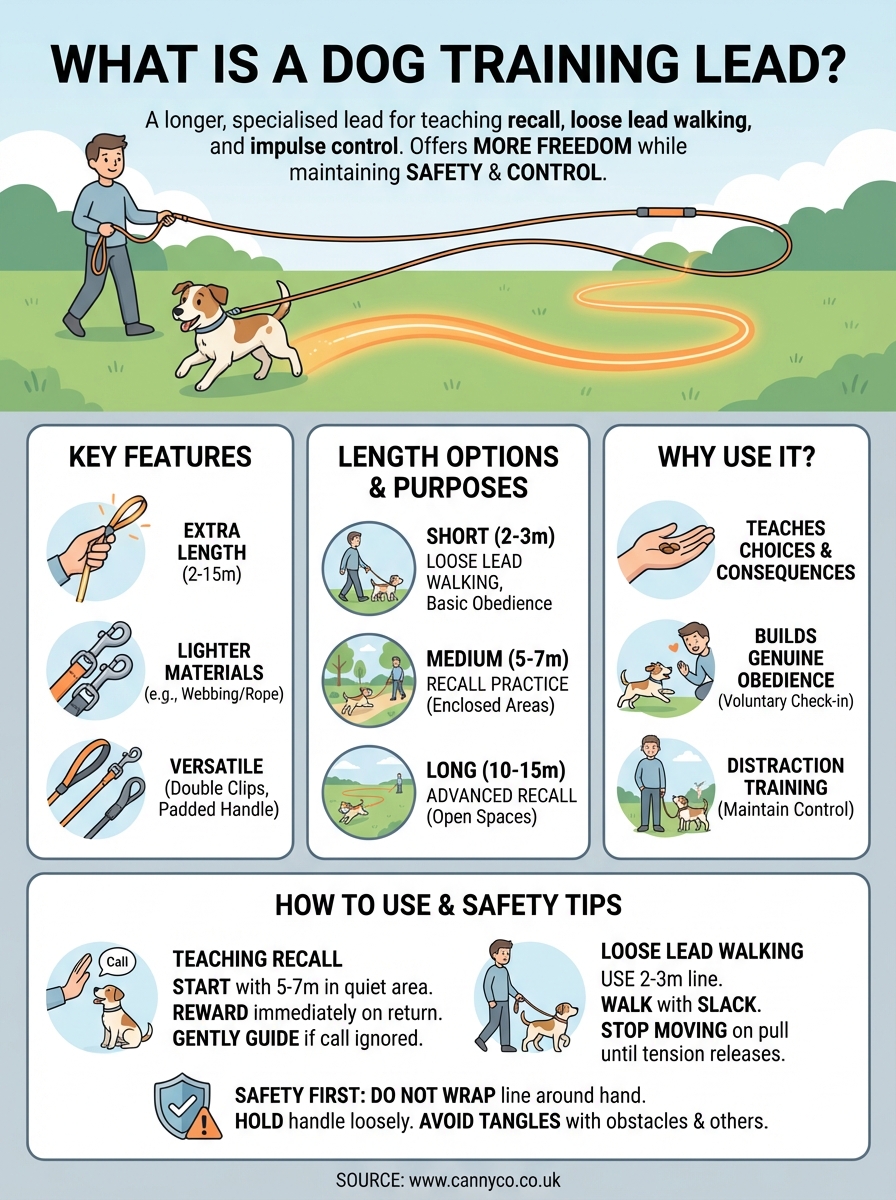
When people ask "what is a dog training lead", they're usually looking for the difference between this and their regular lead. A training lead is purpose-built for teaching rather than everyday walking. The main defining feature is extra length, ranging from 2 metres up to 15 metres, which gives your dog controlled freedom while you work on specific skills. Most training leads use lighter materials than standard leads because you're not constantly holding tension, and many include features like double clips or traffic handles that standard leads don't have.
Length options and their purposes
Training leads come in three main length categories. Short training leads (1-2 metres) give you more slack than a standard lead while teaching loose lead walking or basic obedience. Medium lines (5-7 metres) work well for recall practice in enclosed areas like tennis courts or your garden. Long lines (10-15 metres) let your dog explore open spaces while you maintain emergency control during advanced recall training.
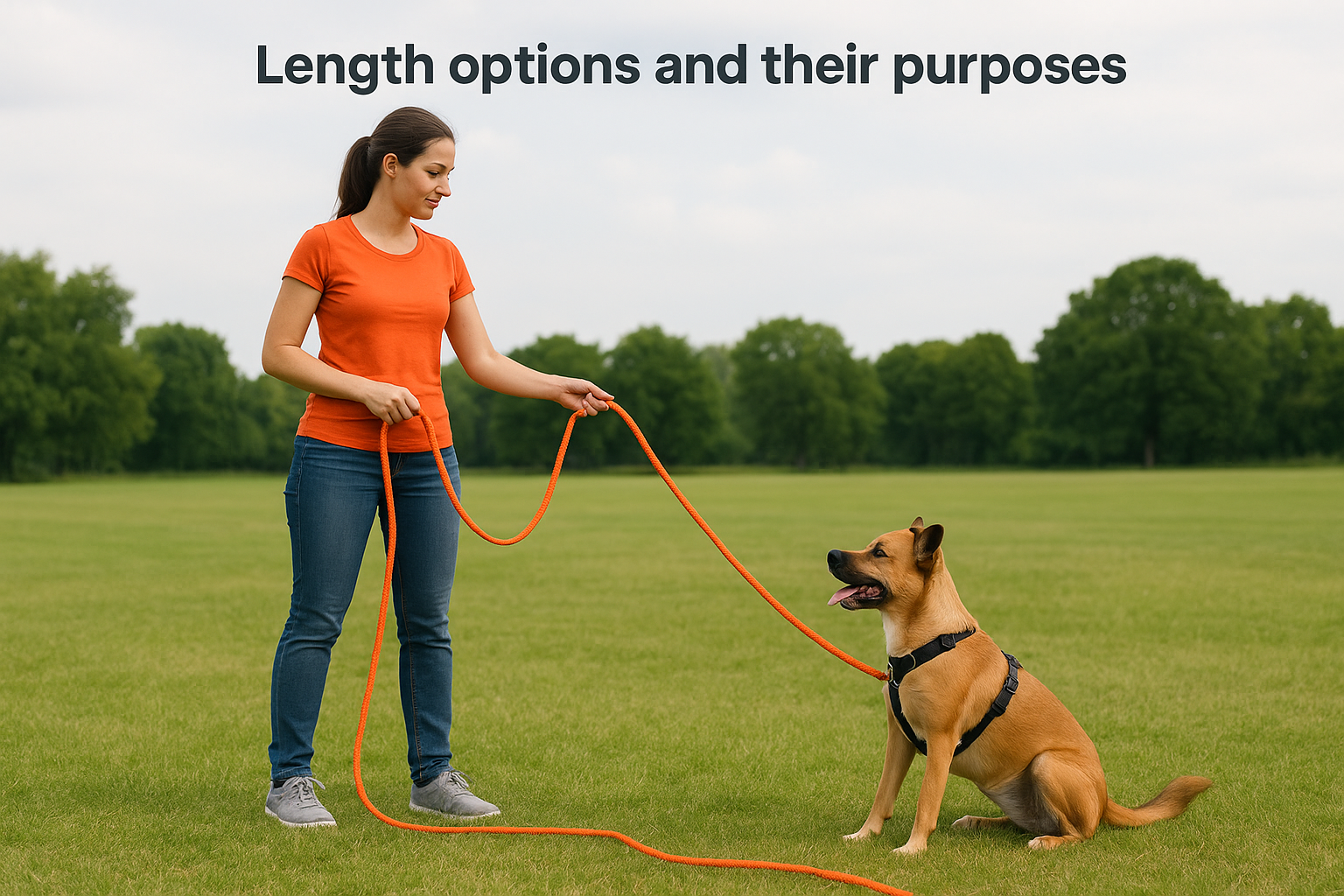
The length you choose directly affects what behaviours you can teach effectively.
Key design features
The construction sets training leads apart from regular leads. You'll find lightweight webbing or rope instead of heavy leather, which matters when your dog drags 10 metres of line around. Many include a padded handle for comfort when you need to grab quickly, plus swivel clips that prevent tangling. Double-ended training leads feature clips at both ends, letting you attach one to a collar and one to a harness for better control during training sessions. Some waterproof models resist odours and clean easily, which helps when your dog runs through muddy fields with the line trailing behind.
Why use a training lead instead of a standard lead?
Standard leads keep your dog close during walks, but they limit your training options. When you understand what a dog training lead is and how it differs, you realise standard leads don't give your dog enough space to make choices and learn consequences. Your dog can't practise recall when they're already next to you, and they can't learn to ignore distractions when you're constantly holding them tight. Training leads solve this by letting you gradually increase distance while maintaining safety.
Building skills that standard leads can't teach
Training leads let your dog experience freedom while you keep control. You can practise recall from 10 metres away, something impossible with a standard lead. Your dog learns to check in with you voluntarily rather than being forced to stay close. This builds genuine obedience instead of simple restraint.
Standard leads teach your dog to walk near you, but training leads teach them to choose to return to you.
The extra length also helps with distraction training. You can stand further back while your dog encounters other dogs, people, or wildlife, stepping in only when needed rather than preventing every interaction through constant tension.
How to use training leads for different goals
Different training goals require different techniques with your training lead. Understanding what is a dog training lead means knowing it's a versatile tool that adapts to multiple training scenarios. You adjust the length and handling method based on whether you're teaching recall, loose lead walking, or distraction work. Each skill needs a specific approach to be effective.
Teaching recall
Start with a 5-7 metre line in a quiet, enclosed space. Let your dog explore while the line drags behind them, then call them back using your recall command. When they return, reward immediately with treats or praise. You gradually increase distance and add distractions as they improve. The line acts as insurance, letting you gently guide them back if they ignore your call without creating negative associations.
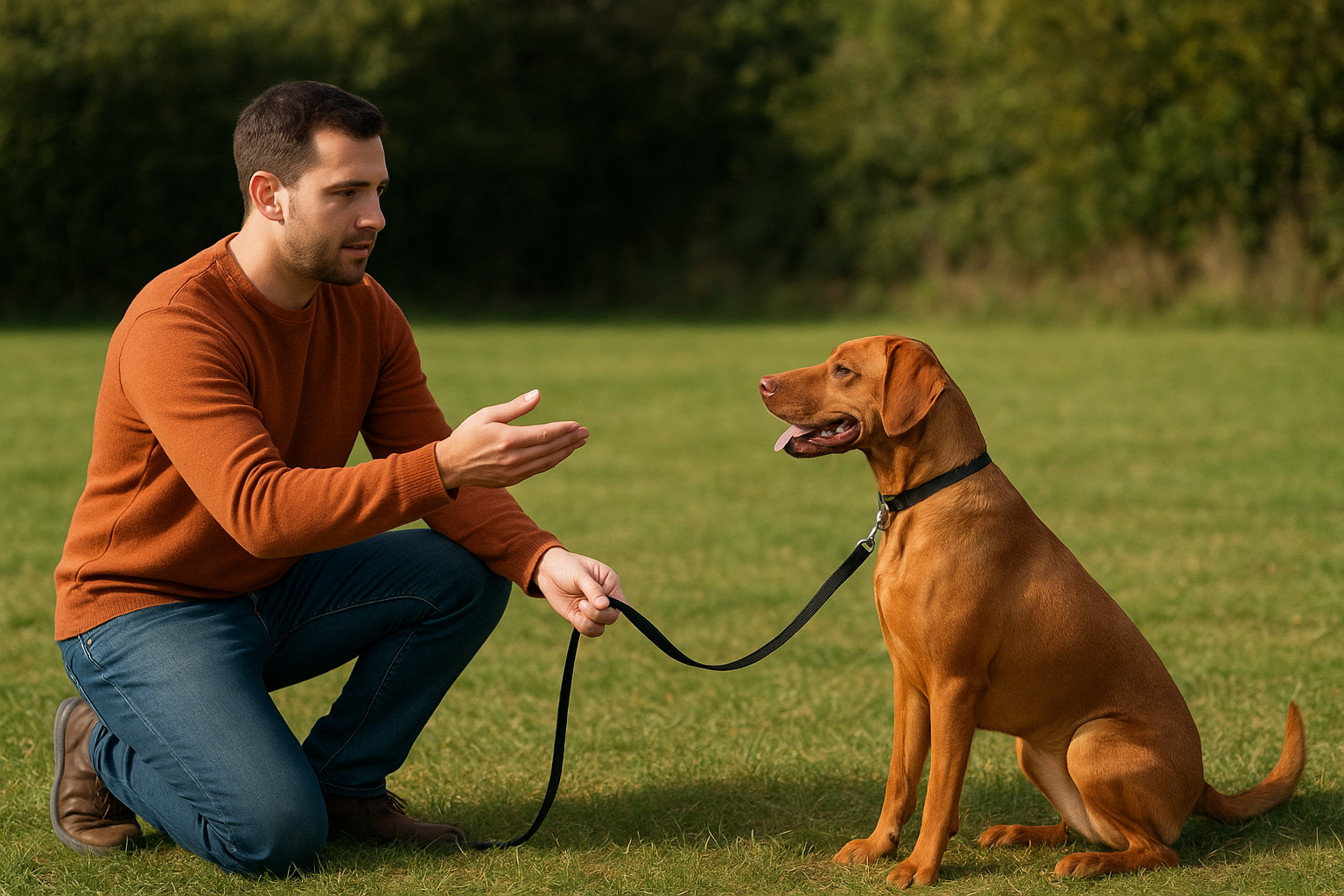
Training leads give you the space to practise recall while preventing your dog from learning they can ignore you.
Loose lead walking practice
Use a shorter 1-2 metre training lead for this skill. Walk normally and reward your dog whenever they choose to walk beside you with slack in the line. If they pull ahead, stop moving until they release tension, then continue. The extra length compared to standard leads gives your dog room to make choices while you teach them that pulling stops all forward progress.
How to choose the right material and length
Choosing the right training lead depends on where you train and what behaviours you're teaching. When you understand what is a dog training lead, you realise the material and length directly affect how well it works. A heavy leather line drags through mud and becomes impossible for your dog to move with, while a thin rope might burn your hands if your dog bolts. The length determines which skills you can practise effectively, so matching both factors to your specific needs makes training sessions more productive.
Material considerations
The material affects durability, comfort, and practicality. Nylon webbing offers good grip and resists weather damage, making it ideal for outdoor training in British conditions. Rope materials (usually polyester or biotherm) work well for long lines because they're lightweight and don't tangle as easily. Waterproof coated leads stay clean and odour-free when your dog runs through wet grass or streams.
Choose materials that suit your training environment rather than what looks best.
Length selection guide
Your training goals determine the appropriate length. Use 1-2 metres for loose lead walking and basic obedience in urban areas. Choose 5-7 metres for recall practice in enclosed spaces like parks or your garden. Select 10-15 metres only for advanced recall training in open fields where your dog needs maximum freedom while you maintain emergency control.
Safety tips for handling long lines and leads
Long training leads create specific safety risks that standard leads don't. The extra length can wrap around your legs, other dogs, or obstacles like trees and posts, creating tangling hazards that can injure you or your dog. Understanding what is a dog training lead includes knowing how to use it without causing accidents. You need to manage the slack properly and stay aware of your surroundings throughout every training session.
Preventing entanglement injuries
Never let the line wrap around your hand or wrist when your dog has slack. If they suddenly bolt, a wrapped line can cause rope burns or even break bones. Instead, hold the handle loosely and let excess line drop to the ground, picking it up in loose loops as your dog moves closer. Watch for people, other dogs, and objects in your training area that could catch the line.
A loose grip on the handle prevents serious hand injuries when your dog unexpectedly runs at full speed.
Managing the line during movement
Keep the line off the ground in wet conditions when possible to prevent it becoming heavy and muddy. Move your position rather than dragging your dog back by reeling in metres of line, which teaches them that pulling works. Always wear proper footwear with good grip when using long lines, as sudden pulls can make you lose balance on slippery surfaces.
Final thoughts on training tools
Understanding what is a dog training lead means recognising it's one tool in your training toolkit, not a complete solution on its own. Training leads work best when you combine them with proper technique, patience, and consistency. They give you the space to teach skills that standard leads can't address, but they won't train your dog by themselves. You still need to reward good choices, set clear boundaries, and practise regularly to see results.
The right training lead makes these sessions safer and more effective. Whether you choose a short 1-2 metre line for loose lead walking or a 10-metre long line for recall work depends on your specific training goals and environment. Start with the basics in controlled spaces, then gradually increase difficulty as your dog improves.
If you're looking for tools that complement your training lead, explore our range of collars and leads designed to make dog walking more enjoyable for both you and your dog.

